
Current Research
Harmful algal bloom (HAB) Research
Modeling the transfer of HAB toxins in Alaskan marine food chains
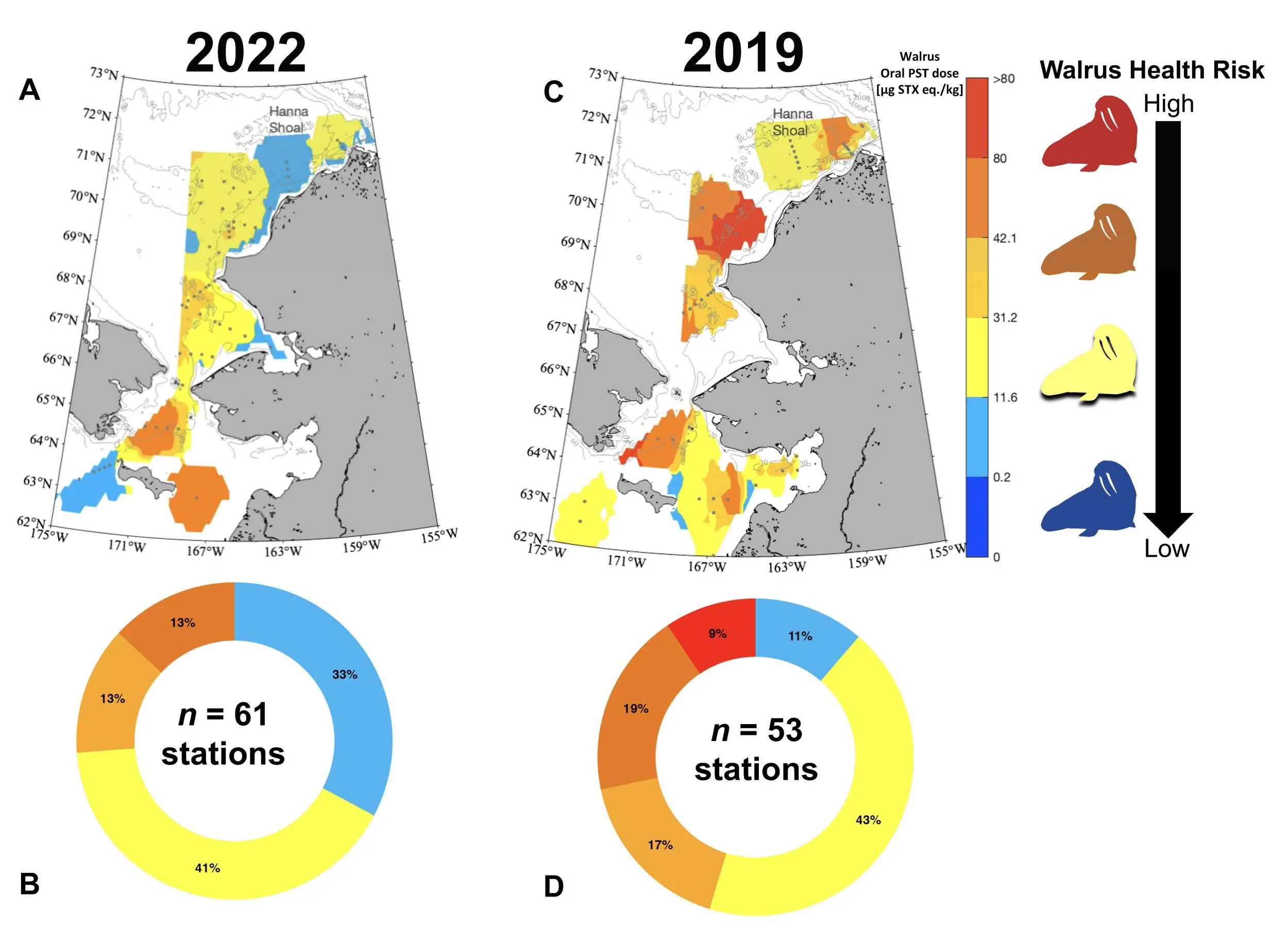
Harmful algal blooms (HABs) are historically rare in Alaskan Arctic waters because they are too cold to support phytoplankton growth. However, climate change is rapidly warming water temperatures resulting in a more hospitable environment for HAB activity. There have been multiple dangerous HAB events of the dinoflagellate, Alexandrium catenella, documented in Alaskan Arctic waters including the summers of 2019 and 2022. Alexandrium produce a potent suite of neurotoxins, collectively called paralytic shellfish toxins (PSTs), that cause negative impacts to human and wildlife health.
Recently, I led the development of models that describe PST movement in a critical food chain consisting of Alexandrium, benthic invertebrates (clams, snails, and worms), and Pacific walruses during HAB events of Alexandrium. Our results indicate that walruses are potentially exposed to high concentrations of PSTs through their diet during and shortly Alexandrium blooms (Figure 1A-D - LINK to paper). These models can be used as tools to predict when HAB events are potentially dangerous walruses, a critical subsistence resource for native and tribal Alaskan communities. I am currently working to improve these models and characterize seasonal exposure to walruses in relation to their spatial movements.
HAB Toxin Accumulation, Exposure Risks, and Impacts in Alaskan Arctic Marine Subsistence Resources
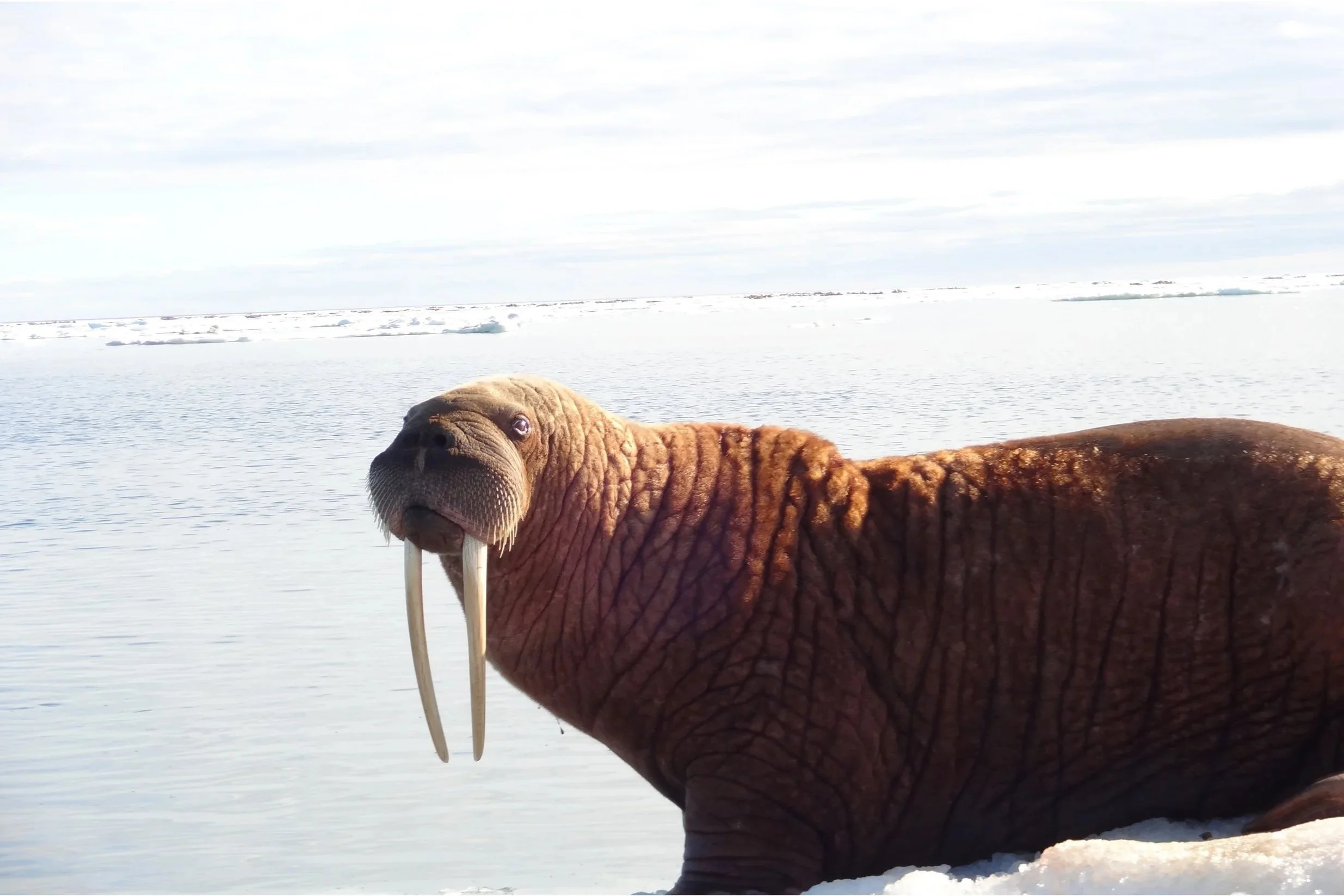
Photo Credit: Emily Bowers; Photo taken under USFWS permit #MA14537C
The walrus is a key marine mammal that is harvested for subsistence by Native Alaskan communities in the western and northern Alaskan Arctic. Recurrent HAB events in the Alaskan Arctic may impact the health of these key marine mammals (Figure 1), however, the specific health impacts remain unknown. I am attempting to translate PST exposures to potential health impacts by analyzing algal toxins along with biomarkers of health including stress, reproductive, and metabolic hormones in walrus fecal samples. This study will help us assess sublethal health impacts to walruses since our samples come from Native Alaskan hunters who harvest healthy individuals. Currently, the sublethal health impacts to marine mammals due to PST exposures are unknown, however, I was part of a team that documented a confirmed saxitoxin ([STX], one of the most potent PSTs) poisoning event of northern fur seals on St. Paul Island located in the Southeastern Bering Sea. This was the most northern documented case of a marine mammal mortality event due to STX poisoning. Thus, while we do not know what the sublethal health impacts are to walruses and other Arctic marine mammals, the bloom activity of Alexandrium in Alaskan waters are capable of generating toxic blooms that result in marine mammal mortalities. These blooms threaten the nutritional, cultural, and economic well-being of coastal communities throughout western and northern Alaska. This research is part of a highly collaborative ECOHAB project.
Beluga Whale Research
Using Fecal Samples to Generate Molecular Datasets for Health Assessments of Aquarium Beluga Whales
The beluga whales at Georgia Aquarium provide a unique opportunity to develop new methods for assessing beluga health. I am leading a project trying to measure different molecular health data in fecal samples obtained using relatively non-invasive methods. The main objectives of this study are to measure a suite of hormones and analyze the microbiome in the same fecal sample, creating an integrative health dataset per whale. Combining the controlled environment and known health status of the whales at the Georgia Aquarium with the health data measured in the feces allows us to validate the hormone and microbiome data we obtain from each fecal sample. This allows us to develop methods for obtaining health data from belugas in aquariums and those in the wild like the Endangered Cook Inlet beluga population in Alaska. Learn more about this study in video below!